What if we ran out of wood one day?
Environment


How Chilean science is protecting the sustainability of productive forests
What would happen if we no longer had wood to build our homes, make furniture, or even produce paper and cardboard? What if the development of forest-based textile fibers—an increasingly valued alternative in the sustainable fashion industry—came to a halt?
The answer sounds like something out of a bad dream: without renewable forest resources, much of the basic infrastructure that supports our daily lives would be at risk.
Behind this silent threat lies the growing impact of climate change. With less rainfall, more frequent heatwaves, extreme frosts, and the emergence of new pests, forest species are facing unprecedented challenges. But in Chile’s Biobío region, a partnership between the University of Concepción (UdeC) and ARAUCO is working to get ahead of this scenario.
The initiative is a pioneering forest genetic engineering platform, driven by the UdeC’s Center for Biotechnology and Bioforest, the R&D center of the forestry company.
For Dr. Rosario Castillo, Director of the Center for Biotechnology, this collaboration is not new—they’ve been working with ARAUCO for over 20 years—but it is now more crucial than ever:
“Since its creation in 2005, the forest genomics lab has collaborated with major companies, always with a single goal: applied research. We want the science we do to have an impact on society, the region, and the country,” she explains.
Castillo notes how, in recent years, the focus has shifted toward sustainability, circular economy, and the search for lower-impact solutions:
“Today, we don’t just want to understand a tree’s genes—we want that knowledge to lead to more resilient varieties, capable of growing in water-scarce areas or resisting disease without losing productivity.”
From the industry’s perspective, Sebastián Mandiola, General Manager of Bioforest, puts it simply:
“Our commitment is to ensure that forest species continue to thrive on Earth for decades to come. Planting and harvesting a forest is not enough. We want to make sure that forest can regenerate and adapt to a changing climate.”
A long-term vision
Mandiola emphasizes that one of ARAUCO’s key contributions is building a bridge between research and real-world application:
“We bring real-world demand—the need for trees that can withstand drought or frost—and we do so with a long-term investment mindset. A forestry project can take 20 years to show results, and few companies are willing to sustain that kind of timeline. ARAUCO is.”
That vision is shared by Claudio Balocchi, Head of Forest Research at Bioforest, who offers a technical perspective:
“Today, ARAUCO is a global leader in pine genetics. We’re practically the only company planting 100% of radiata pine using clones—currently the forefront of forestry technology. But we can’t stop there. We’re now advancing in genome editing and gene selection, because the future demands more than just productive trees—it demands resilient ones.”
Balocchi warns that extreme weather events will only become more frequent:
“We can’t accept that trees simply grow less when rainfall is scarce. We need to identify physiological mechanisms that allow them to keep growing with less water and prevent new pests from destroying our best varieties. Genetics can help us preserve those valuable clones.”
The trees of tomorrow
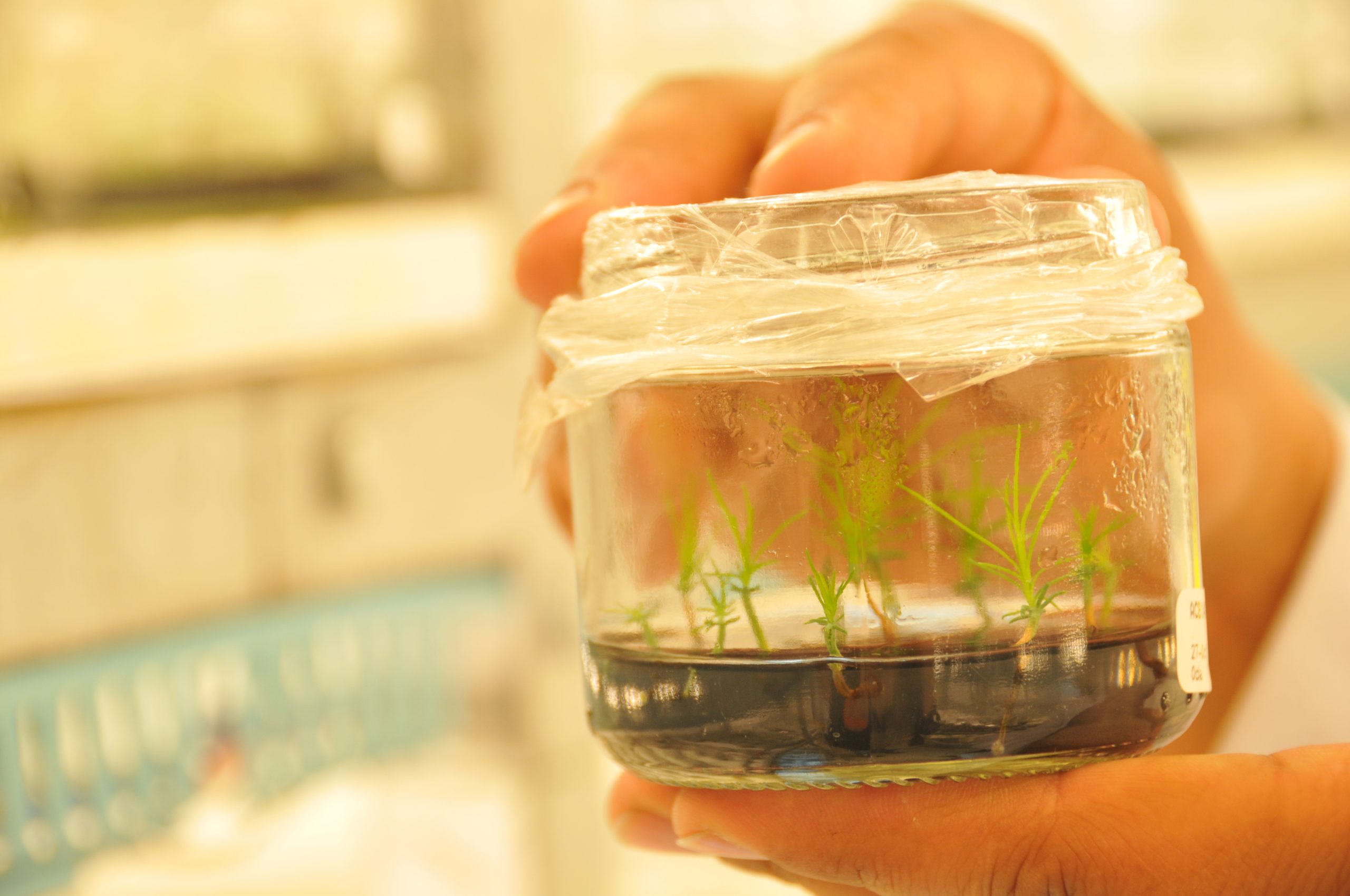
The forest genetic engineering platform launched by UdeC and ARAUCO is the only one of its kind in Chile. Its mission is ambitious: to identify genes with potential drought resistance, validate them in model species, and transfer that knowledge to trees like pine and eucalyptus—all while training top-tier talent in biotechnology.
Sofía Valenzuela, Director of the Forest Genomics Lab, explains:
“Our goal is to validate genes that confer drought tolerance—first in model plants like Arabidopsis, then in species such as poplar and eucalyptus. Within 5 to 10 years, we hope to have a platform capable of generating healthier, more productive trees that can grow in increasingly demanding conditions.”
Postdoctoral researcher Paula Aguayo adds:
“The idea is for these genotypes to be planted in drought-prone areas—like rain-fed zones—and still produce the same or greater amounts of biomass or cellulose compared to less tolerant genotypes.”
Academia and the future
Beyond the technical side, the university–industry collaboration also aims for social impact. Ximena Gauché, Vice Rector for Institutional Relations at UdeC, highlights the formative role:
“We hope this initiative will promote the development of advanced human capital through theses, graduate programs, and collaborative experiences. Sustainability requires professionals who are committed to the challenges of today and tomorrow.”
For Mandiola, collaboration is essential on this path:
“Academia can only go so far on its own, and so can the private sector. But when we move forward together, we go faster, create more impact, and add more value for the country.”
For the experts, the key is that science must not only anticipate collapse—it must lead us toward solutions for the future.
Because if we ever find ourselves asking what we would do without wood, the ideal answer should already be growing in our labs.